In a custom e-commerce application, your code rarely operates in isolation. To process a single order, your Laravel application might need to talk to Stripe for payment processing, TaxJar for sales tax calculation, Shippo for shipping labels, and NetSuite for inventory syncing.
If you build these integrations using synchronous HTTP requests directly inside your controllers, your application will eventually crash. Third-party APIs experience downtime. Network latency spikes. Rate limits are exceeded. If your checkout controller is waiting 15 seconds for FedEx to respond, the customer will refresh the page, duplicate the transaction, and create a customer service nightmare.
This is the Asynchronous Integration Playbook. It details how senior Laravel developers insulate custom e-commerce stores from the unreliability of third-party APIs.
The Principle of Synchronous Isolation
The first rule of e-commerce API integration is defining what must be synchronous and what can be asynchronous. You should relentlessly push as many API calls as possible into background queues.
What MUST be Synchronous
- Tax Calculation: You cannot charge the customer without knowing the exact final price. The call to TaxJar (or your internal tax calculator) must happen synchronously during the checkout review step.
- Payment Authorization: You must receive an initial token or authorization from Stripe/Braintree before allowing the user to proceed.
- Inventory Reservation: You should reserve stock synchronously so the customer does not purchase an item that is already reserved for another checkout flow.
What MUST be Asynchronous (Queued)
- Fulfillment Syncing: Sending the order details to your ERP or 3PL warehouse.
- Shipping Label Generation: Requesting a FedEx/UPS tracking number via Shippo.
- Transactional Emails: Sending the receipt via Postmark or SendGrid.
- Accounting Sync: Pushing order and payment data to NetSuite or Xero.
Architecting the Shipping Label Integration
Let's look at a common failure point: generating a shipping label. If you do this in the controller immediately after payment, and the Shippo API is down, the user sees a 500 error page, even though their credit card was charged.
The Queued Job Strategy
Instead, create a dedicated Laravel Job: GenerateShippingLabelJob.
class GenerateShippingLabelJob implements ShouldQueue
{
    public function handle(ShippoService $shippo)
    {
        $label = $shippo->createLabel($this->order);
        $this->order->update(['tracking_number' => $label->tracking_number]);

        event(new OrderShippedEvent($this->order));
    }
}
Handling Failures Gracefully
Because this job runs in the background, a failure does not break the customer experience. Laravel's Queue system provides built-in resilience. Configure the job to retry with exponential backoff, and move unrecoverable failures to a dead-letter table so your operations team can intervene if needed.
If FedEx is down for 10 minutes, the job can fail, wait, retry, and succeed later. The customer still sees a confirmed order. The system recovers without manual intervention.
Architecting the Payment Integration
Payments are the most critical integration, yet they are often implemented incorrectly. The most common mistake is trusting the synchronous frontend redirect from the payment gateway (e.g., Stripe Checkout returning the user to a /checkout/success route).
The Webhook-First Architecture
If the user completes the payment on Stripe, but their browser crashes or their phone loses signal before the redirect to /checkout/success happens, the controller logic never runs. The user paid, but the order is marked as Pending in your database.
To fix this, adopt a Webhook-First architecture.
- The frontend redirects to Stripe. Your database order remains
Pending. - Stripe processes the payment.
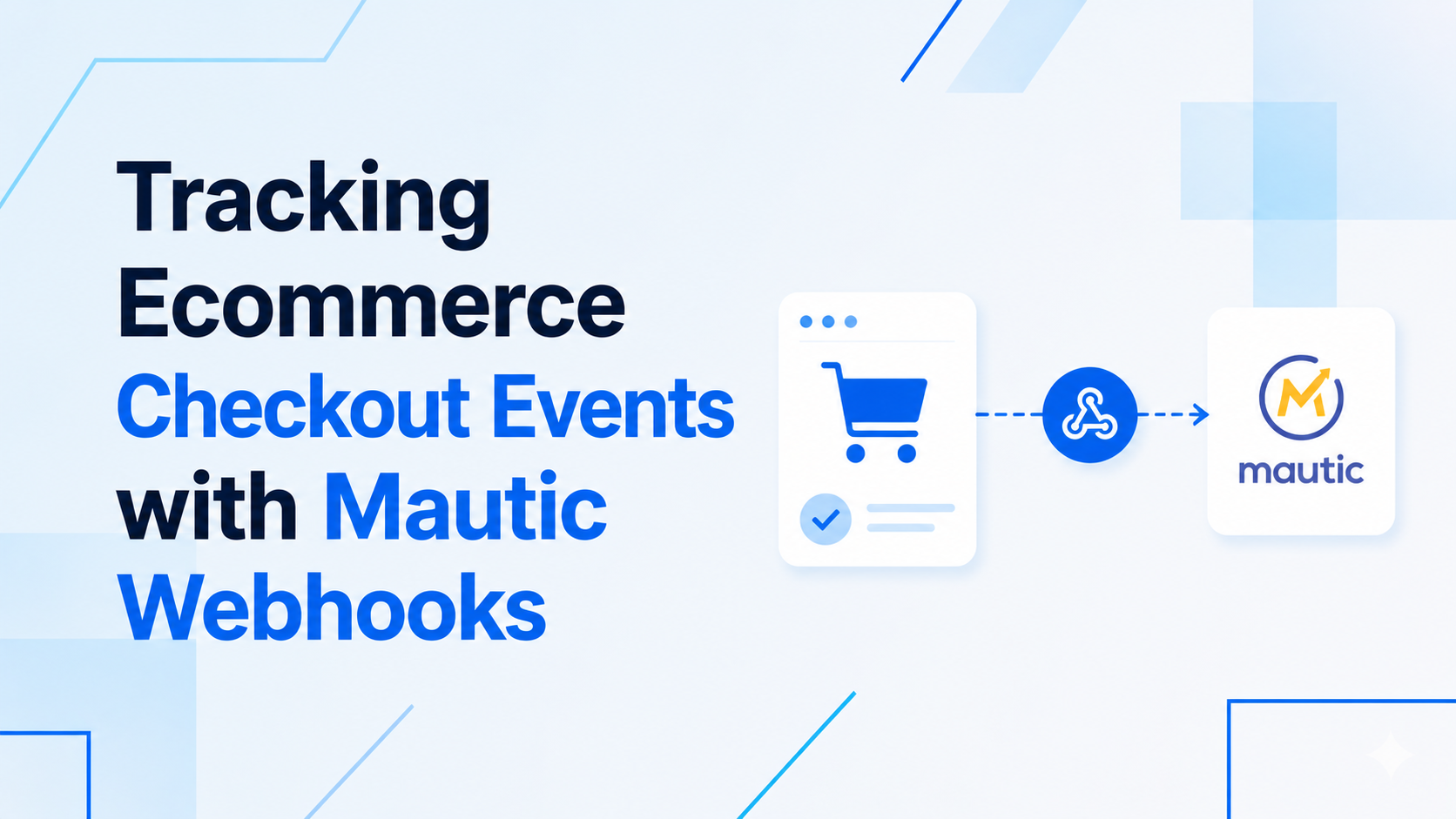
- Stripe sends a server-to-server HTTP POST request (a Webhook) to your Laravel application (e.g.,
/api/webhooks/stripe) containing the eventpayment_intent.succeeded. - Your webhook controller catches this event and updates the order status to
Paid, commits the inventory reservation, and dispatches fulfillment jobs.
This guarantees that the order state is updated regardless of what happens to the user's browser.
Idempotency: Preventing Double Processing
Webhooks are delivered with an "at least once" guarantee. Stripe may send the same payment_intent.succeeded webhook twice due to network retries. If your webhook controller blindly processes the event, it may trigger duplicate shipping labels or duplicate accounting syncs.
Your webhook controller must be idempotent. Store the Stripe event ID in a processed_webhooks table. On receipt, check whether the event has already been handled. If it has, return 200 OK immediately. If not, insert the ID and process the event.
Designing a Resilient Integration Layer
The architecture of your integration layer matters more than the specific API you are calling. Treat every third-party API as an external service contract with clearly defined success, failure, and retry behavior.
- Service classes: Isolate Stripe, TaxJar, Shippo, and ERP calls behind dedicated PHP service classes. Do not scatter raw HTTP requests across controllers.
- Event-driven side effects: Fire domain events like
OrderPaidEventandShippingLabelRequestedEvent. Let listeners and queued jobs handle the side effects. - Retry policies: Use Laravel's job retry features, including delayed retries and custom backoff logic for transient failures.
- Fallback handling: If a payment provider returns a temporary error, capture the failure, alert the operations team, and continue to honor the customer's order path instead of failing silently.
Monitoring and Operational Readiness
A strong integration is not just code. It is also the alerts, dashboards, and runbooks that let your operations team respond quickly when an external API misbehaves.
Instrument every webhook and queued job with structured logs. Capture external request IDs, response codes, latency, retry counts, and failure reasons. Log context such as the order ID, customer ID, and integration endpoint.
Set alerts for critical thresholds: too many failed Stripe webhooks in 10 minutes, a queued job retrying more than three times, or an exponential backoff that extends beyond acceptable business windows. These alerts help your team fix issues before customers feel them.
Testing Your API Contracts Before Deployment
Integration code must be tested, not just manually reviewed. Use contract tests and local API mocks to validate the exact request and response shapes.
- Mock Stripe, Shippo, and tax API responses in your test suite so you can verify success, failure, and retry logic.
- Write end-to-end tests for the checkout flow that assert the order becomes
Paidonly after a simulated webhook arrives. - Include tests for webhook replay, duplicate event handling, and edge-case failures such as invalid shipping addresses or declined payments.
These tests keep your deployment safe and prevent production issues that only become visible under scale.
Operational Safety During High-Traffic Events
During a sales spike, the risk is not only downtime. It is the risk of silent failure: orders that appear successful to customers but are never fulfilled or paid correctly. Your architecture must include safety nets.
Build an order reconciliation dashboard that compares the number of successful payment events with the number of fulfilled orders. If the payment count and shipping count diverge, your team should be able to investigate immediately.
Similarly, track webhook delivery status and queue backlog size. If the number of pending jobs exceeds worker capacity, add temporary capacity or throttle non-critical operations until the system recovers.
Conclusion
Third-party APIs are the weak links in any custom e-commerce architecture. By aggressively pushing non-critical API calls into robust Laravel queues, using a webhook-first payment flow, and instrumenting integration contracts with retries and monitoring, you build a resilient platform that survives spikes and outages.
If your current e-commerce platform suffers from timeouts, dropped orders, or failed ERP syncs, it is time to upgrade your API integration strategy. Review my backend API development services to see how I build resilient, queue-backed integrations for Laravel stores that need to stay live under real business pressure.

Prakash Tank
Full-Stack Architect & Tech Enthusiast. Passionate about building scalable applications and sharing knowledge with the community.