A Laravel React developer can be a strong fit when your product needs one engineer who understands both the backend workflow and the frontend user experience. This is especially useful for SaaS dashboards, admin panels, MVPs, API-first web applications, and products where backend decisions directly affect the interface.
It is not always the right choice. Some projects need separate specialists. The goal is to decide when one full-stack engineer creates speed and accountability, and when splitting Laravel and React responsibilities is safer.
What Does A Laravel React Developer Actually Own?
A Laravel React developer usually works across the product flow: database, backend logic, API contracts, authentication, frontend screens, state handling, and release support.
- Laravel backend development with routes, controllers, services, queues, policies, and Eloquent models.
- API design for React screens, dashboards, mobile apps, or future integrations.
- React interface development for forms, tables, filters, dashboards, and workflow screens.
- Authentication, authorization, and role-based UX decisions across backend and frontend.
- Bug fixing and delivery support across the full feature path.
This ownership is valuable when the project needs fewer handoffs and faster decisions between backend and frontend work.
When One Full-Stack Engineer Makes Sense
One Laravel React developer usually makes sense when the product is still moving quickly and the same person can reduce coordination cost.
- Startup MVPs: Early products often need quick iteration, not a large team split too soon.
- SaaS dashboards: Billing, roles, metrics, admin workflows, and reports need backend and frontend decisions together.
- Internal tools: Admin panels, operations dashboards, CRMs, and workflow tools benefit from fast end-to-end delivery.
- API-first web apps: React screens need stable Laravel API contracts and clear error handling.
- Existing products: One engineer can trace a bug from UI behavior to controller, query, queue, or API response.
If the project is closer to product delivery than isolated UI work, a full-stack model can be efficient. The broader full-stack developer service page covers this kind of ownership.
When Separate Laravel And React Developers Are Better
A single full-stack developer is not magic. Some projects need deeper frontend or backend specialization.
- The React app has complex animations, design systems, accessibility work, or heavy frontend state complexity.
- The Laravel backend has high-scale distributed systems, complex compliance, or many integrations.
- The product roadmap is large enough for parallel frontend and backend work every sprint.
- The team already has strong frontend and backend leads and needs specialist capacity.
- The release process requires independent QA ownership across multiple teams.
In those cases, one Laravel React developer can still help as an integration owner, but the project may benefit from separate specialist roles.
Architecture Decisions That Matter
Laravel and React can work well together when boundaries are clear. The goal is not to mix everything together, but to make the connection between backend and frontend predictable.
- Define API request and response contracts before building complex UI states.
- Keep validation rules consistent between Laravel responses and React forms.
- Use clear authentication and permission checks on both backend and frontend.
- Avoid making React screens depend on unstable database shapes.
- Move slow work into Laravel queues instead of blocking user interactions.
- Document error states so frontend screens can handle failures gracefully.
For API-heavy work, pair the role with backend and API development planning. For React-heavy screens, review React and Next.js development scope.
Where Laravel React Works Especially Well
Laravel and React are a strong combination for products that need structured backend logic and interactive interfaces.
- SaaS admin dashboards: accounts, roles, subscriptions, metrics, and reports.
- CRM systems: leads, pipelines, follow-ups, tasks, notifications, and activity history.
- Ecommerce operations: catalog, inventory, orders, returns, payments, and customer support screens.
- Workflow automation: forms, rules, approvals, queues, logs, and retry screens.
- Analytics tools: filters, charts, exports, saved views, and user-level permissions.
These product areas need backend correctness and frontend clarity at the same time.
Questions To Ask Before Hiring
If you are evaluating a Laravel React developer, ask questions that test both sides of the stack.
- How do you design a Laravel API before building React screens?
- How do you handle validation errors from Laravel inside React forms?
- How do you structure permissions so the UI and backend stay consistent?
- How do you debug a slow dashboard: frontend rendering, API latency, query cost, or queue delay?
- How do you avoid rewriting UI when API contracts change?
- How do you decide whether a feature belongs in one full-stack task or split frontend/backend tasks?
You can combine these with the questions to ask before hiring a Laravel developer in India.
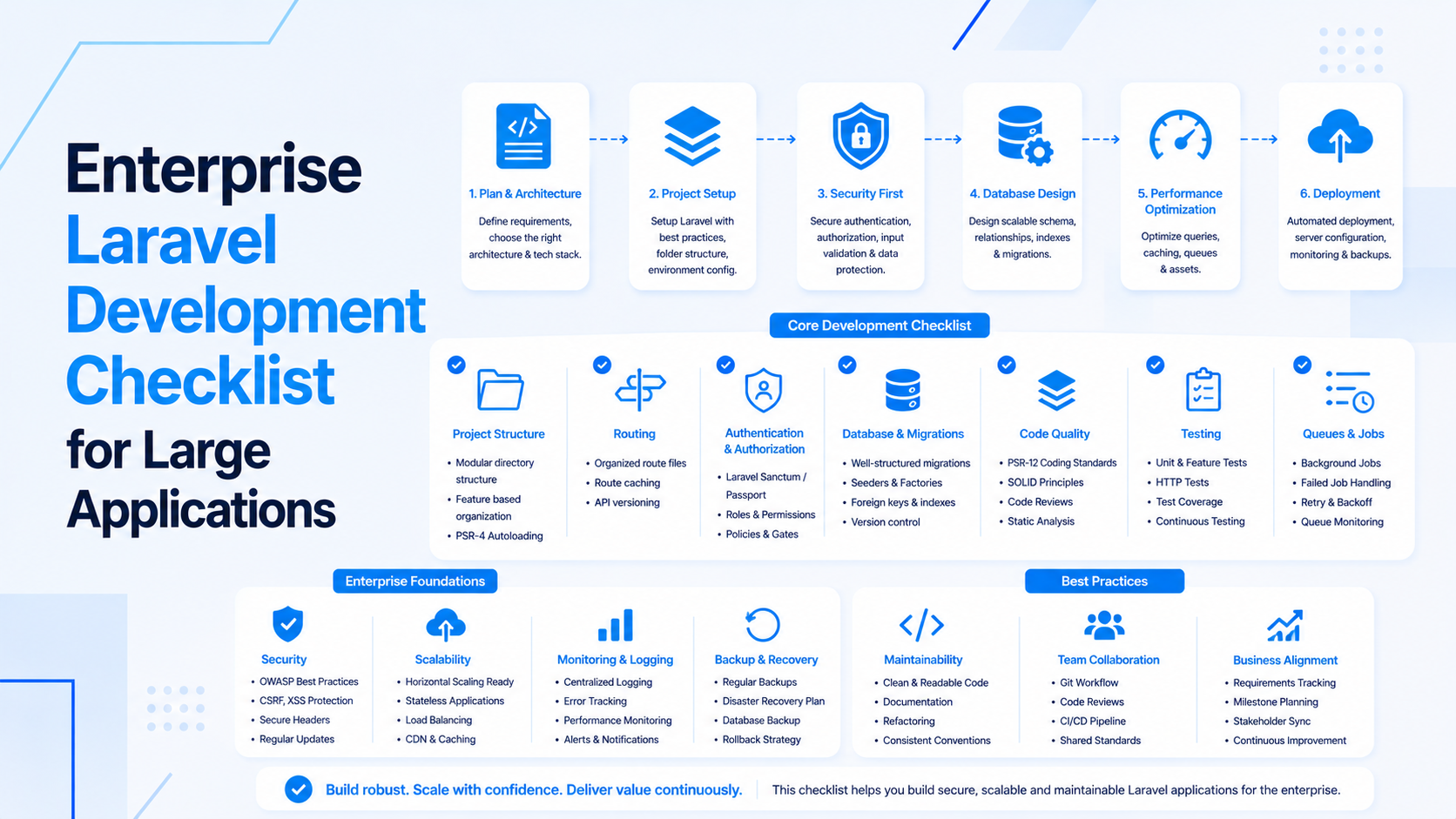
Delivery Checklist For A Laravel React Feature
- Write the feature goal and acceptance criteria.
- Define database changes and backend business rules.
- Design API endpoints, validation, error responses, and permissions.
- Build React screens with loading, empty, error, and success states.
- Add tests for the Laravel feature flow and critical API behavior.
- Check mobile/responsive behavior where the screen is user-facing.
- Document deployment steps, migrations, and post-release checks.
Final Decision
A Laravel React developer makes sense when your project needs end-to-end ownership, fewer handoffs, and fast product iteration across backend and frontend. It is a strong fit for MVPs, SaaS dashboards, admin systems, and API-first products.
If the product needs very deep frontend specialization or large parallel delivery, use separate specialists. If the product needs one accountable engineer to move features from database to browser, a Laravel React developer can be the practical choice. Start with full-stack development support, Laravel development, or relevant project case studies.

Prakash Tank
Full-Stack Architect & Tech Enthusiast. Passionate about building scalable applications and sharing knowledge with the community.