Founders and CTOs are frequently forced to choose between the two most dominant web development paradigms: the MERN Stack (MongoDB, Express, React, Node.js) and Laravel (PHP + Vue/React/Livewire). The choice of technology dictates the type of developer you hire, which in turn dictates how fast you can launch and how easily you can scale.
Here is a direct comparison of the MERN stack developer versus the full-stack Laravel developer.
The MERN Stack Developer (The JavaScript Specialist)
A MERN developer writes JavaScript (or TypeScript) across the entire stack. They build the React frontend, the Node.js backend API, and query the NoSQL MongoDB database.
The Strengths:
- Highly Interactive UIs: React is the industry standard for complex, state-heavy interfaces (like SaaS dashboards or design tools). A MERN developer spends 60-70% of their time crafting this frontend experience.
- Real-Time Capabilities: Node.js is naturally non-blocking and handles thousands of concurrent WebSocket connections beautifully. If your app requires real-time chat, live notifications, or collaborative editing, a MERN developer is the right choice.
- The Talent Pool: JavaScript is the most popular language in the world. Finding MERN developers (especially React specialists) is generally easier than finding senior specialists in other languages.
The Weaknesses:
- Reinventing the Wheel: Express.js is a minimalist framework. It provides routing and that is about it. The MERN developer has to manually bolt on authentication, database ORMs, validation, and email systems. This takes time, and mistakes can lead to security vulnerabilities.
The Full-Stack Laravel Developer (The Rapid Builder)
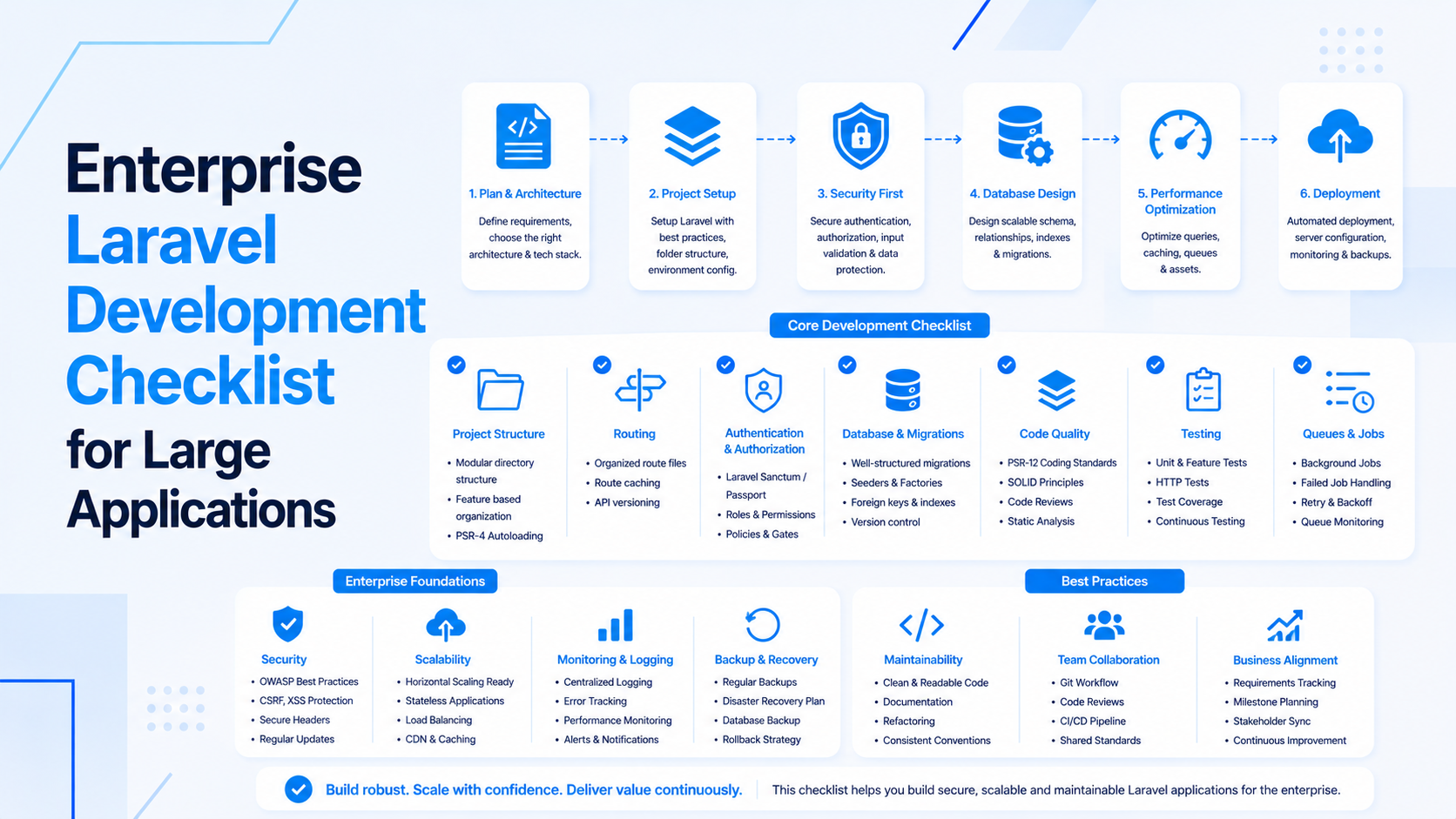
A Laravel developer writes PHP for the backend and uses Blade, Livewire, Vue, or React for the frontend. Laravel is a "batteries-included" framework.
The Strengths:
- Incredible Time-to-Market: A Laravel developer can launch a fully functional SaaS MVP faster than almost anyone else. Laravel includes built-in authentication, password resets, background queues, scheduled tasks, and even billing (Laravel Cashier) right out of the box.
- Strict Architecture: Laravel enforces strict, opinionated architectural patterns. This means the codebase is highly standardized. If you hire a second Laravel developer, they will know exactly where everything is located immediately.
- Relational Data Mastery: Laravel developers use MySQL or PostgreSQL (via the Eloquent ORM). This is vastly superior to MongoDB for applications that require strict data integrity, complex financial transactions, or heavy relational reporting.
The Weaknesses:
- Real-Time Complexity: While Laravel can handle real-time WebSockets (via Laravel Reverb or Pusher), it is not as naturally suited for massive concurrent connection scaling as Node.js.
- Frontend Tooling: While many Laravel developers use React or Vue, some rely heavily on Laravel Livewire or Blade. If your product requires an incredibly complex, offline-first mobile-web experience, a dedicated React specialist (MERN) might be a better fit.
Which Should You Hire?
- Hire MERN if: You are building a highly interactive, real-time application (chat, live dashboard, collaborative tool) or you already have a massive React frontend and need a compatible backend.
- Hire Laravel if: You are building a traditional SaaS, an e-commerce platform, a marketplace, or a content-heavy application, and your absolute highest priority is getting to market quickly and securely.
I specialize in both ecosystems. If you are unsure which stack is right for your product, visit my hire MERN stack developer or hire Laravel developer pages to discuss your specific technical requirements.

Prakash Tank
Full-Stack Architect & Tech Enthusiast. Passionate about building scalable applications and sharing knowledge with the community.