SaaS architecture should make the product easier to operate, not just more impressive on a diagram. Before choosing frameworks, cloud tools, or microservices, founders and product teams need clear decisions about tenancy, billing, roles, queues, data ownership, and launch readiness.
This guide covers the architecture basics that shape most SaaS applications, whether the backend is built with Laravel, Node.js, or a mixed full-stack setup.
Start With The Account Model
The account model is the foundation of SaaS architecture. It decides how users, teams, subscriptions, permissions, and data relate to each other.
- Personal accounts: Best for individual tools where one user owns their own data.
- Workspaces or teams: Best for collaborative products where many users share one account context.
- Organizations: Best for B2B products with departments, locations, billing contacts, and admins.
- Multi-account users: Needed when one person can belong to multiple companies or workspaces.
Choose this early. Changing the account model after users and billing records exist is painful.
Tenancy And Data Isolation
Tenancy defines how customer data is separated. Many early SaaS products use one shared database with tenant-scoped records. That can work well when the application is disciplined about scoping every query.
- Use a clear tenant, account, workspace, or organization identifier on tenant-owned tables.
- Scope queries through policies, services, middleware, or model conventions.
- Test that users cannot access another tenant's records.
- Keep admin/support access explicit and logged.
- Consider separate databases only when compliance, scale, or customer isolation requires it.
If the database model is still unclear, include database design and optimization before feature development accelerates.
Billing Architecture
Billing is not just checkout. SaaS billing affects permissions, limits, invoices, failed payments, upgrades, downgrades, customer support, and analytics.
- Model plans, subscriptions, trials, billing status, and cancellation states clearly.
- Keep paid feature checks on the backend.
- Store external payment IDs and webhook events for support and debugging.
- Plan failed payment retries, dunning emails, and grace periods.
- Separate billing events from product usage events where possible.
For Laravel SaaS products, Laravel development services can cover subscription workflows, admin panels, and API-backed billing flows.
Roles And Permissions
Roles should match the product workflow. Too few roles create security issues; too many roles slow down the MVP.
- Start with owner, admin, member, and viewer only if those distinctions are needed.
- Scope permissions by tenant so one user's role does not leak across accounts.
- Protect exports, billing changes, user invites, deletes, and admin actions carefully.
- Show unavailable actions in the UI only after backend rules are enforced.
- Log sensitive permission changes.
For React dashboards, pair backend permission rules with clear frontend states through React and Next.js development.
Queues And Background Jobs
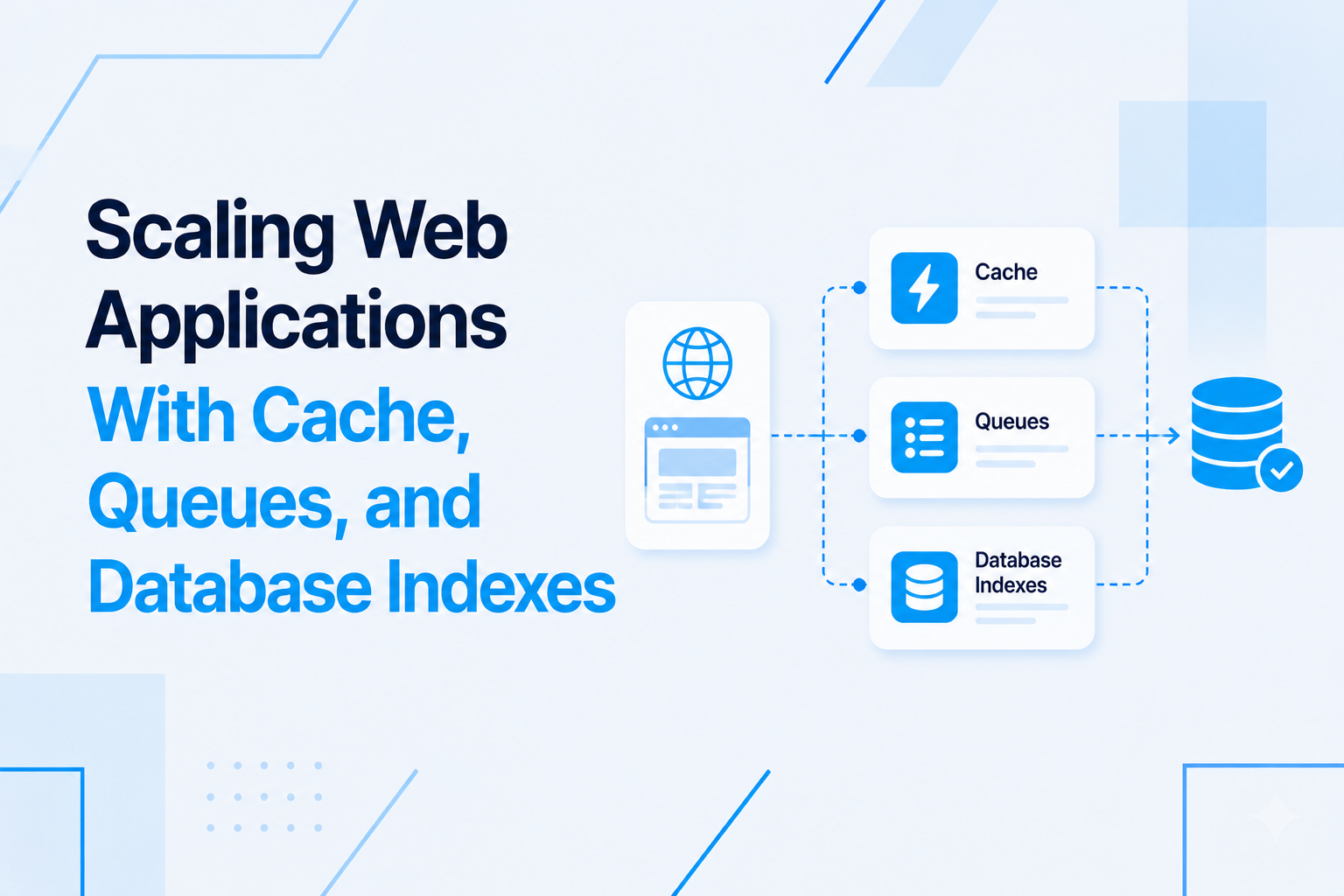
Queues keep SaaS applications responsive. They are essential when work may be slow, retryable, or dependent on an external service.
- Use queues for emails, imports, exports, report generation, billing syncs, notifications, and webhook retries.
- Track job status when users need to see progress.
- Record failures with enough context to debug them.
- Keep idempotency in mind for payment and integration jobs.
- Monitor queue depth, failed jobs, and worker health.
For backend implementation planning, review backend API development and Node.js development.
API And Dashboard Design
The SaaS frontend needs predictable APIs. Dashboards become slow when every widget invents its own data path.
- Define response contracts for lists, detail pages, metrics, settings, and billing screens.
- Use consistent pagination, filters, sorting, and validation errors.
- Move expensive metrics into cached summaries or background jobs.
- Return permission context when the UI needs to show available actions.
- Keep reporting endpoints separate from transactional endpoints when complexity grows.
Observability And Launch Readiness
A SaaS product should be observable before customers depend on it.
- Log important account, billing, permission, and integration events.
- Monitor errors, queue failures, latency, database time, and scheduled jobs.
- Use staging for release checks before production deploys.
- Prepare backups, rollback notes, and incident steps.
- Confirm emails, storage, payment webhooks, cron jobs, and workers are configured.
If deployment is part of the project, plan it with cloud infrastructure development.
Architecture Decisions To Document
- Account and tenant model.
- Billing states, plan limits, and payment provider behavior.
- Role and permission rules.
- Queue jobs, retry behavior, and failure handling.
- API contracts for dashboards and settings.
- Deployment, monitoring, backup, and rollback process.
Final SaaS Architecture Checklist
- The account model supports the real customer workflow.
- Tenant data isolation is enforced and tested.
- Billing is modeled as an ongoing lifecycle, not a one-time checkout.
- Roles and permissions are simple but enforceable.
- Queues handle slow or retryable work.
- APIs and dashboards are designed together.
- Production observability is ready before launch.
If you need help turning these decisions into a build plan, start with full-stack SaaS application development or use the SaaS application developer checklist for founders to prepare the first scope.

Prakash Tank
Full-Stack Architect & Tech Enthusiast. Passionate about building scalable applications and sharing knowledge with the community.