The lifecycle of a software startup is chaotic. Founders often make the mistake of either under-engineering their product (building an unscalable mess that breaks immediately) or over-engineering it (spending 18 months building a flawless architecture for a product nobody wants to buy).
The key to technical success in a startup is matching your engineering effort to your current business stage. This article outlines the standard software development roadmap for startups, from Day 1 to Series A.
Phase 1: The Minimum Viable Product (MVP)
Goal: Prove the business model. Does anyone actually want this? Will they pay for it?
Timeline: 1 to 3 months.
The Technical Strategy: Speed is the only metric that matters. Every line of code is a liability because you might throw the whole product away next month if the market rejects it.
- Use Boring Technology: Do not use experimental frameworks. Use proven, rapid-development monoliths like Laravel (PHP) or a simple MERN stack.
- Do Not Build What You Can Buy: Do not build your own authentication system—use Auth0 or Laravel Breeze. Do not build a custom billing engine—use Stripe Checkout.
- Embrace "Technical Debt" Safely: It is okay to write messy frontend code to get a feature out the door quickly. However, do not compromise on database schema design or security. UI can be rewritten; a corrupted database cannot be easily fixed.
- Deployment: A single VPS (DigitalOcean/Linode) or a Platform-as-a-Service (Heroku/Vercel). Do not use Kubernetes or complex AWS setups.
Phase 2: Product-Market Fit (The "Oh No, It Worked" Phase)
Goal: Stabilize the platform as real users flood in, expose bugs, and demand new features.
Timeline: 3 to 12 months.
The Technical Strategy: This is the most painful phase. The MVP code is starting to crack under pressure. You must balance paying down technical debt while continuing to ship features to keep early adopters happy.
- Introduce Background Queues: If your app freezes for 5 seconds when a user generates a PDF, you must offload that work. Introduce Redis and background workers (BullMQ in Node, or Laravel Horizon) to handle heavy tasks asynchronously.
- Implement CI/CD: You can no longer deploy by manually FTPing files or running `git pull` on the live server. Implement a Continuous Integration (GitHub Actions) pipeline to run automated tests before any code is merged, preventing catastrophic bugs from hitting production.
- Database Indexing: As data grows, your MVP queries will become slow. Start logging slow queries and adding proper database indexes.
- Application Monitoring: You must know the app is broken before your customers tweet about it. Integrate error tracking (Sentry) and uptime monitoring.
Phase 3: Scaling and Growth (Series A)
Goal: Scale the architecture to handle 10x the traffic and scale the team from 1-2 developers to a full engineering department.
Timeline: 12 to 24+ months.
The Technical Strategy: The focus shifts from speed-to-market to reliability, security, and team velocity.
- Horizontal Scaling: Your single server can no longer handle the load. You must decouple the application so it can run on multiple servers simultaneously behind a Load Balancer. This requires ensuring the app is completely stateless (e.g., storing user sessions in Redis, not in server memory).
- Specialization: The era of the solo "Full-Stack MVP Developer" ends. You will start hiring specialized roles: a dedicated Frontend React Engineer, a Backend API Engineer, and a DevOps engineer to manage the AWS infrastructure.
- Microservices (Maybe): Only now should you even consider breaking parts of your monolith into microservices, and only if a specific feature (like a heavy data-processing engine) requires different scaling characteristics or a different language (like Python or Go) than the rest of the app.
The Core Lesson
Never build Phase 3 architecture when you are in Phase 1. If you build a distributed microservice architecture before you have 10 paying customers, you will run out of money before you launch.
If you are a founder at the beginning of this journey and need a pragmatic, experienced developer to guide you through the MVP phase and beyond, visit my hire full-stack developer India page to discuss your roadmap.
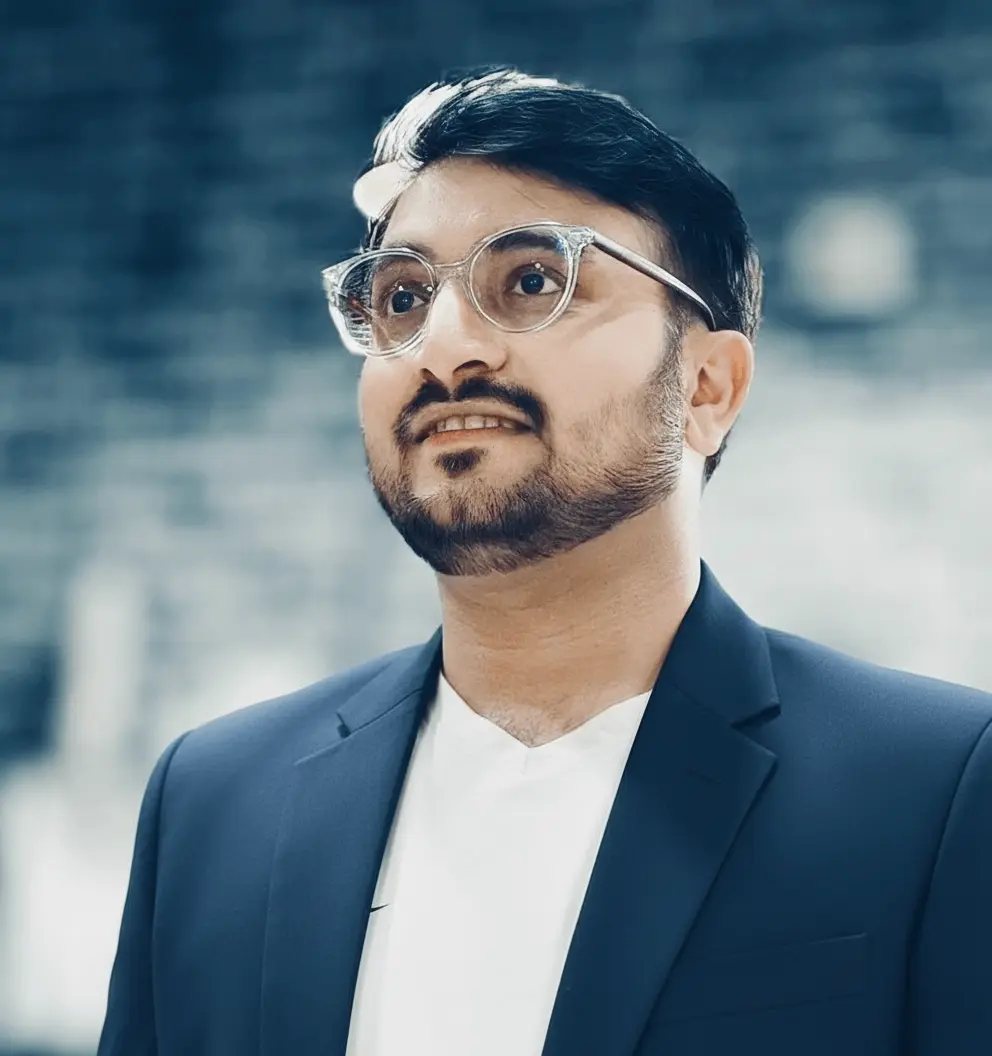
Prakash Tank
Full-Stack Architect & Tech Enthusiast. Passionate about building scalable applications and sharing knowledge with the community.