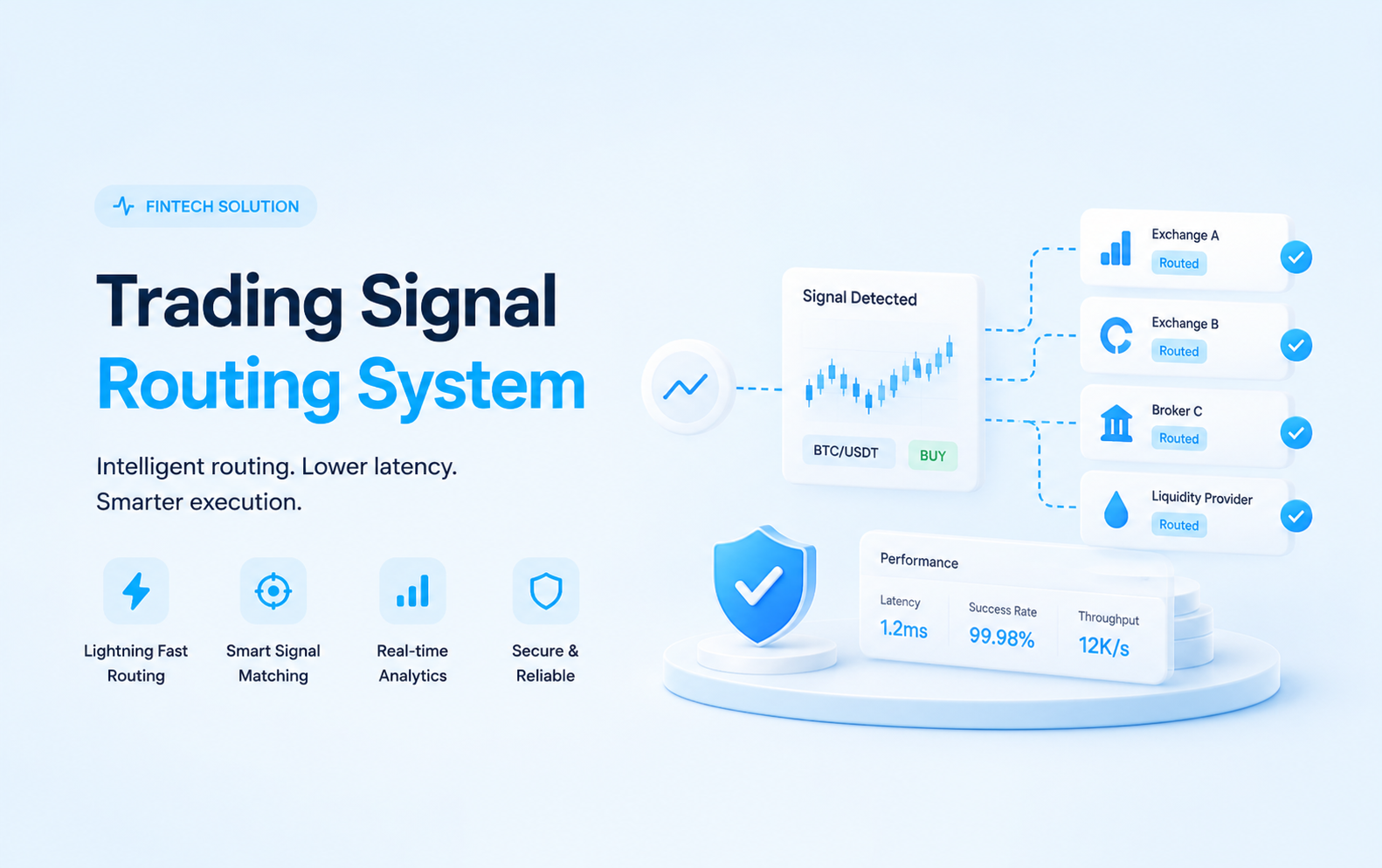
Project Overview
Trading Signal Routing System is a practical Automation/Trading case study built around a real business need: make the product easier to use, easier to manage, and easier to grow. The goal was not to create a flashy screen only for presentation. The goal was to design a working digital system with clear user journeys, stable backend logic, and useful admin controls. This kind of trading automation software matters because growing teams need software that can support daily work without becoming slow, confusing, or expensive to maintain.
The project was planned for business owners, product teams, operations staff, and end users. Each group needs a different experience, but the platform still has to feel connected. A customer should be able to complete the main task quickly. An admin should be able to see what is happening in the system. A manager should be able to review reports and make decisions. This case study explains how the product structure, database design, modules, and technical approach were planned to support all of these needs in simple, human-friendly ways.
Business Goal
The main business goal was to turn a complex workflow into a clean digital product. Many companies start with manual work, spreadsheets, phone calls, disconnected tools, and repeated follow-ups. That setup works for a short time, but it becomes hard to scale. Errors increase, customers wait longer, and teams lose visibility. This project solves that problem by placing the core workflow inside one reliable application with clear roles, clear screens, and clear data ownership.
From an SEO and growth point of view, the project was also planned with search-friendly structure, readable content, meaningful page titles, and keyword-focused metadata. Strong software alone is not enough if potential customers cannot find the service online. The content strategy uses natural phrases related to trading automation software, custom software development, Laravel development, API development, automation, dashboard design, and scalable web application architecture. These keywords are used in a helpful way so the page stays readable for humans and still gives search engines enough context.
User Experience
The user experience was kept simple. The most important actions are easy to find, and each screen has a clear purpose. Instead of showing too many controls at once, the workflow is divided into logical steps. This helps new users understand the platform without training. It also helps returning users finish their work faster. Buttons, filters, forms, status labels, and confirmation messages are designed to reduce confusion and build trust.
Responsive design was an important part of the plan. Many users open business tools from phones, tablets, and smaller laptops. The interface has to stay readable on each device. The layout uses flexible grids, clear spacing, and mobile-friendly navigation. This helps the platform feel stable across devices and improves user engagement. Better engagement can indirectly support SEO because visitors stay longer, move through more pages, and understand the value of the service more clearly.
Core Modules
The platform is organized around modules that match real operational work. This makes the product easier to explain, easier to test, and easier to improve later. The main modules include:
- Signal Receiver
- Rule Validation
- Routing
- Execution Status
- Alerts
- Logs
Each module has a defined responsibility. For example, management screens focus on control and review. Customer-facing screens focus on speed and clarity. Reporting screens focus on decision-making. This separation keeps the codebase cleaner and reduces the risk of one feature breaking another. It also helps the business add new features later without rebuilding the whole system from scratch.
Technical Approach
The technology stack for this project includes Laravel, Python, Redis, Webhooks, Queues. The stack was selected to balance speed, stability, and long-term maintenance. The backend is responsible for business rules, validation, permissions, data storage, and integrations. The frontend is responsible for clear presentation and smooth user interaction. Background jobs are used for slower tasks such as notifications, report generation, file processing, sync jobs, and retry workflows where needed.
The database structure is designed to keep important records traceable. A good business application should answer simple but important questions: who created this record, who updated it, what status is it in, what happened before, and what should happen next. This approach helps support teams debug issues, helps managers review activity, and helps developers add new reporting features. Good data structure is also important for SEO-focused websites because structured content and consistent URLs make pages easier to maintain.
Performance and Reliability
Performance was considered from the start. Common pages should load quickly, heavy operations should not block the user, and repeated data should be cached when it makes sense. Redis, queues, optimized queries, and careful indexes can help keep the platform responsive. For dashboards and reporting pages, the system can prepare summaries instead of calculating everything again on every request. This keeps the user experience smooth even as the data grows.
Reliability is also about failure handling. APIs can fail, users can upload the wrong file, payment gateways can timeout, and background jobs can be interrupted. The platform is planned with validation, retry logic, meaningful error messages, and operational logs. These details may not look exciting in screenshots, but they make a major difference in real business use. A reliable application protects the brand and reduces support pressure.
Security and Access Control
Security is handled through role-based access, server-side validation, safe file handling, and controlled admin permissions. Users should only see what they are allowed to see. Admins should have enough power to manage the platform, but critical actions should still be protected. Depending on the project type, the system can include audit logs, rate limiting, secure password flows, protected uploads, and careful handling of sensitive data.
This approach is especially useful for categories like fintech, healthcare, marketplaces, automation, and education platforms where data quality and trust matter. Even for smaller websites, basic security and clear permissions are important. A secure platform supports better customer confidence, better operational discipline, and better long-term growth.
Admin and Operations
A strong admin panel is one of the most important parts of a custom web application. Business teams need to manage records, search data, update statuses, review requests, export reports, and solve customer issues. The admin experience for Trading Signal Routing System is designed to reduce dependency on developers for daily tasks. When business users can manage the system themselves, the product becomes more useful and less expensive to operate.
Operational screens can include filters, status badges, activity history, bulk actions, and helpful empty states. These details make the product easier to use every day. They also help teams find problems early. For example, an admin dashboard can show pending items, failed jobs, incomplete profiles, payment issues, or delayed requests. This gives the team a clear view of what needs attention.
SEO and Growth Value
For a portfolio website, each project page should do more than show screenshots. It should explain the problem, the solution, the technology, and the business value in simple language. This helps visitors understand the work and helps Google understand the page topic. The content for this project naturally includes phrases such as trading automation software, custom Laravel development, scalable web application, API integration, dashboard development, automation workflow, and business software solution.
The growth value is better search visibility, faster operations, cleaner user journeys, and measurable business growth. A well-written case study can attract business owners who are searching for similar solutions. It can also support internal linking from service pages, blog posts, and category pages. This creates a stronger website structure. Search ranking is never guaranteed, but useful content, clear metadata, fast pages, clean URLs, and consistent publishing all improve the chance of better visibility over time.
Result
The final result is a maintainable project structure that can grow with business needs. The system gives users a clear experience, gives admins better control, and gives the owner a stronger foundation for future features. Because the platform is built around real workflows, it can support daily operations instead of becoming only a brochure-style website.
This project also works as a strong portfolio signal. It shows experience in planning, backend development, frontend implementation, database design, API workflows, admin panels, automation, performance, and SEO-aware content structure. For clients looking for a full-stack developer in India, Laravel developer, web application developer, or custom software development partner, this case study explains the practical value behind the work in clear and simple English.