The backend of a SaaS product carries the parts customers rarely see but depend on every day: accounts, permissions, subscriptions, APIs, jobs, integrations, reports, logs, and deployment safety. Whether the backend is built with Laravel, Node.js, or both, the checklist should start with product reliability.
This guide gives founders and technical teams a practical SaaS backend checklist before building, reviewing, or scaling a product.
Choose The Backend Role Clearly
Laravel and Node.js can both power SaaS backends. The right choice depends on the product workflow, team skills, integrations, real-time needs, and existing codebase.
- Laravel: Strong for admin panels, business workflows, billing, queues, relational data, APIs, and fast product delivery.
- Node.js: Strong for JavaScript teams, real-time workflows, API gateways, event-heavy systems, and React/Next.js aligned stacks.
- Hybrid: Useful when a Laravel product needs a Node.js realtime layer, or a Node.js product needs a Laravel-style admin/business backend.
If you need broader architecture ownership, compare Laravel development, Node.js development, and full-stack product development before locking the stack.
API Contract Checklist
SaaS products usually depend on APIs for dashboards, settings, billing, integrations, and mobile or frontend clients.
- Use consistent request validation and error responses.
- Define response contracts for lists, detail pages, metrics, and settings.
- Support pagination, filtering, sorting, and search intentionally.
- Keep auth and permission failures predictable for the frontend.
- Document breaking changes before clients depend on the API.
- Use API tests for critical workflows.
For deeper API implementation, review backend API development.
Tenancy And Account Data
Every SaaS backend needs a reliable tenant model. This is where many future bugs are either prevented or created.
- Define account, workspace, team, or organization ownership.
- Scope tenant-owned queries consistently.
- Test that users cannot access another tenant's records.
- Log admin/support access to customer data where appropriate.
- Plan account suspension, cancellation, deletion, and data export behavior.
The architecture context is covered in SaaS architecture basics.
Authentication And Authorization
Authentication confirms who the user is. Authorization decides what they can do. Both need backend enforcement.
- Protect login, signup, password reset, invitation, and session flows.
- Use roles and permissions that match real product workflows.
- Enforce account/workspace ownership on every protected resource.
- Protect billing, exports, deletes, user invites, and admin actions.
- Rate-limit sensitive endpoints.
- Audit role, billing, and security-sensitive changes.
Billing And Subscription Logic
Billing logic should be treated as core backend behavior, not only a payment form.
- Model plans, subscriptions, trials, grace periods, cancellations, and failed payments.
- Store payment provider customer, subscription, invoice, and webhook IDs.
- Verify webhook signatures and handle duplicate webhook events safely.
- Enforce plan limits and paid features on the backend.
- Record billing events for support and reporting.
Database And Data Integrity
SaaS backend quality depends heavily on database design.
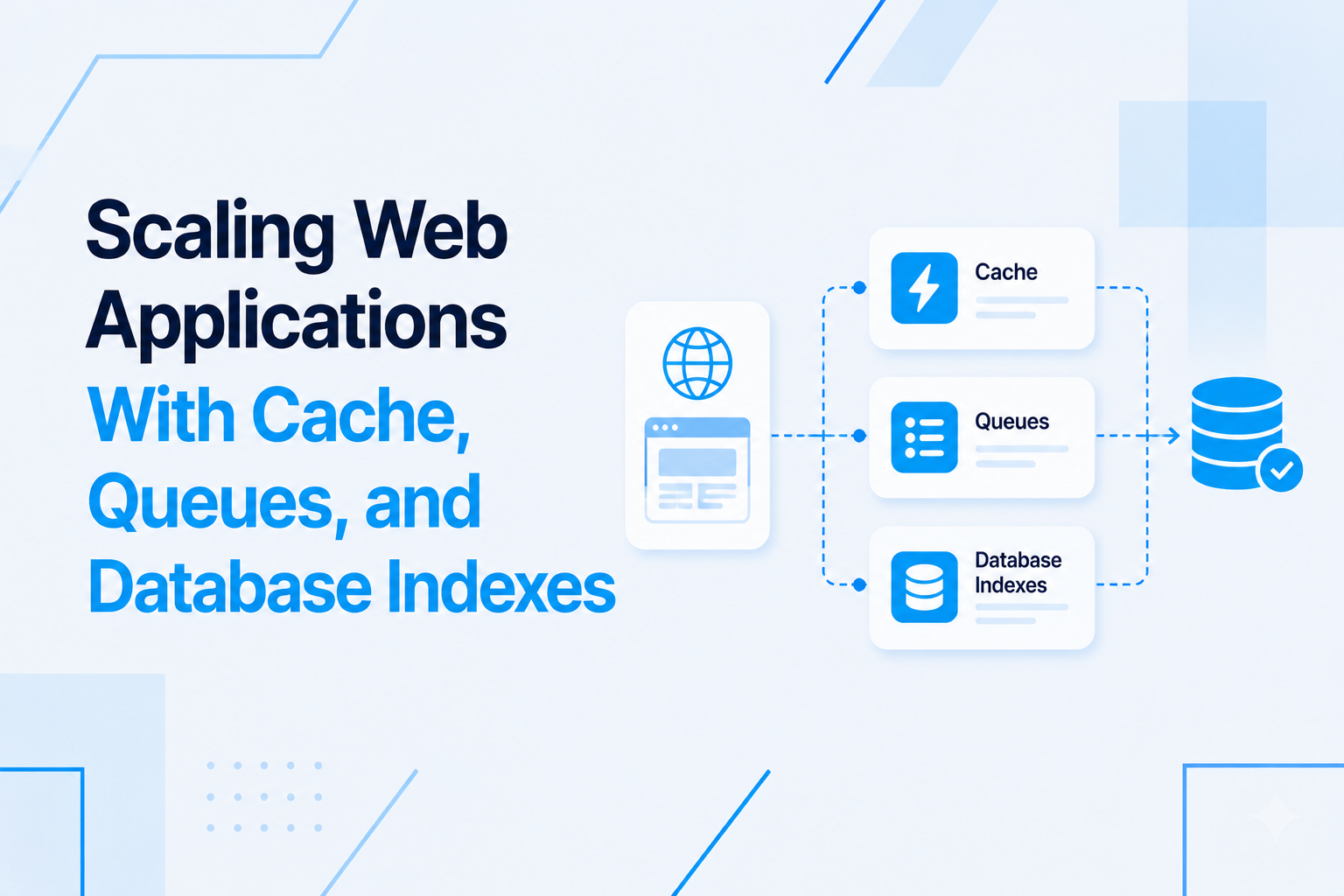
- Use indexes for tenant scopes, dashboards, search filters, and reporting queries.
- Use transactions for billing, inventory, ledger, permission, or multi-table changes.
- Keep migrations safe for production data.
- Avoid repeated N+1 queries in dashboard and API endpoints.
- Plan backups, restores, exports, retention, and deletion workflows.
If the product already has query or reporting pressure, include database design and optimization.
Queues, Jobs, And Integrations
Queues make the SaaS backend more resilient when work is slow, retryable, or dependent on external systems.
- Use jobs for emails, imports, exports, notifications, webhook retries, billing syncs, and report generation.
- Make payment and integration jobs idempotent.
- Track job status when users need progress feedback.
- Monitor failed jobs and retry behavior.
- Keep third-party API credentials, rate limits, and error handling documented.
Observability And Deployment
The backend should tell you when something is wrong before customers have to explain it.
- Log request IDs, tenant/account context, user IDs, job failures, and integration errors.
- Monitor API latency, database time, queue depth, memory, and error rates.
- Use staging checks for auth, billing, tenant isolation, jobs, and integrations.
- Prepare rollback notes for risky database and billing changes.
- Restart workers and clear caches as part of deployment where needed.
For production setup, pair backend work with cloud infrastructure development.
Final SaaS Backend Checklist
- The backend stack matches the product workflow and team capability.
- APIs are consistent, documented, and tested for core flows.
- Tenant data isolation is enforced and covered by tests.
- Auth, permissions, billing, and plan limits are backend-controlled.
- Database design supports dashboards, reporting, and future growth.
- Queues handle slow and retryable work.
- Logs, monitoring, deployment, and rollback processes are ready.
If you need backend ownership for a SaaS product, start with backend API development, Laravel SaaS development, Node.js backend development, or full-stack SaaS delivery.

Prakash Tank
Full-Stack Architect & Tech Enthusiast. Passionate about building scalable applications and sharing knowledge with the community.