A startup MVP should turn an idea into a usable first release that can teach you something real. It does not need every future feature, but it does need enough product, backend, frontend, database, and deployment discipline to support early users.
This checklist helps founders work with a startup MVP developer from idea to first release.
Define The First Useful Outcome
- Write the user problem in one clear sentence.
- Define the first workflow that proves value.
- Identify who uses the MVP and who makes the buying decision.
- Decide what must happen for the first user to say the product helped.
- Separate learning goals from nice-to-have features.
For end-to-end implementation support, start with full-stack MVP development.
Scope The First Release
- Choose the smallest feature set that supports the core workflow.
- Document user roles, permissions, and admin needs.
- Define onboarding, dashboard, notifications, and support flow only as far as launch requires.
- Delay advanced analytics, complex automation, and multi-role edge cases until usage proves the need.
For scope decisions, see building a SaaS MVP without overengineering.
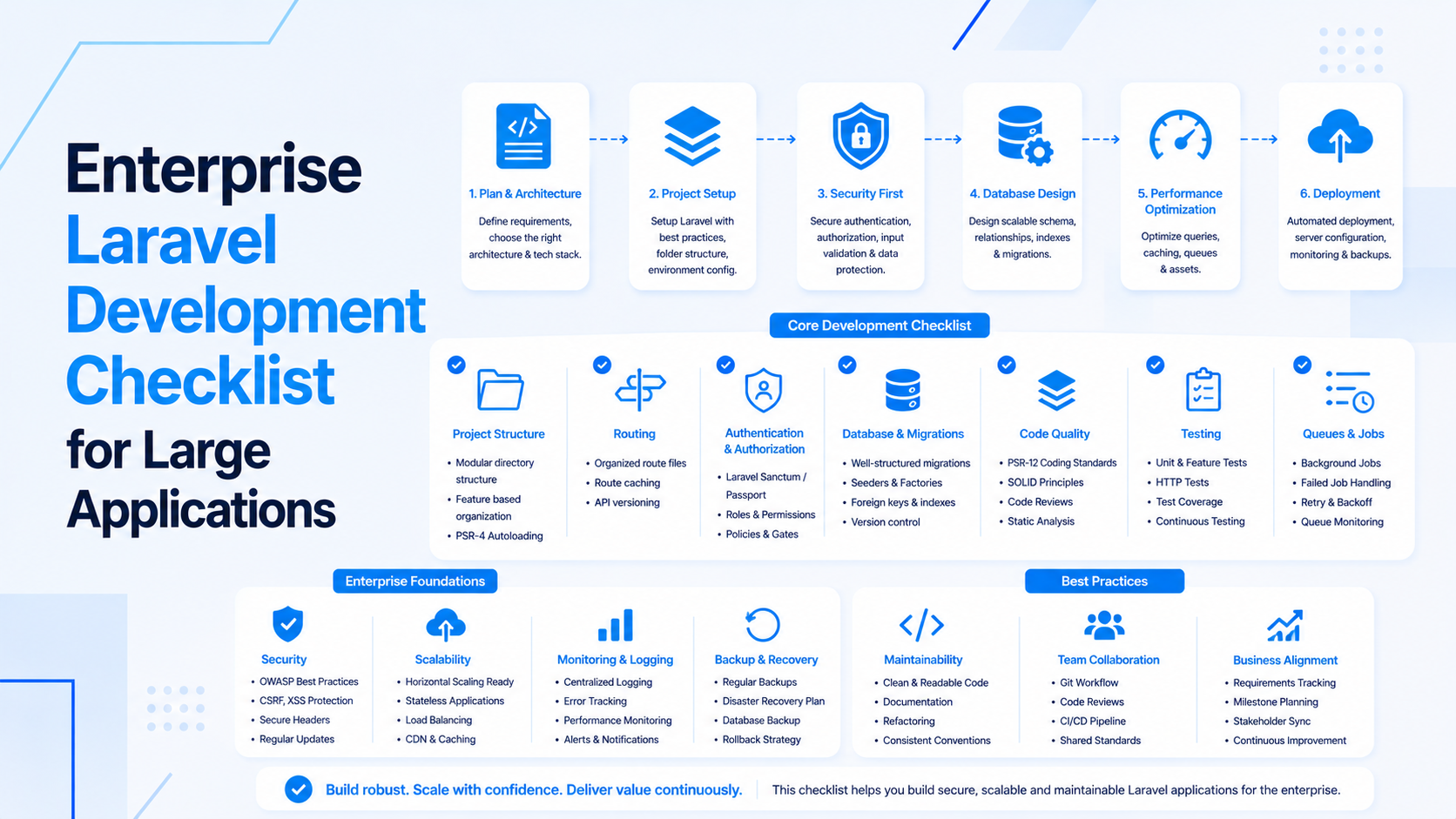
Technical Checklist
- Choose a stack that matches the team and product workflow.
- Design API contracts before frontend work goes too far.
- Model core data, statuses, and ownership clearly.
- Use queues for emails, imports, exports, notifications, and slow integrations.
- Prepare staging, logs, backups, and deployment notes before launch.
For backend planning, review backend API development and database design.
Launch Readiness
- Critical flows are tested with real-like data.
- Signup, auth, permissions, forms, payments, emails, and dashboard states are checked.
- Errors and failed jobs are visible.
- There is a rollback plan for risky changes.
- Feedback collection is ready for early users.
If infrastructure is included, plan cloud deployment before launch day.

Prakash Tank
Full-Stack Architect & Tech Enthusiast. Passionate about building scalable applications and sharing knowledge with the community.